There’s an undeniable magic in a perfectly charred, bubbling pizza pulled straight from a wood-fired oven. The smoky aroma, the crispy crust, the melted cheese – it’s an experience that transports you straight to an Italian piazza. However, for many home enthusiasts, the thought of firing up a wood-fired oven can feel like a daunting, time-consuming task. You might worry about getting the fire started, reaching the right temperature, or maintaining consistent heat. But what if we told you that with the right approach, lighting your wood-fired pizza oven quickly and efficiently at home is not only achievable but immensely satisfying? This guide will cut through the complexities, offering straightforward techniques, essential tips, and expert advice to help you transform your backyard into a pizzeria without the lengthy wait.
Understanding Your Wood Fired Pizza Oven
Before you strike that match, grasping the fundamentals of your wood-fired pizza oven is key to mastering rapid ignition and heat retention. These magnificent culinary tools are designed to create an environment where heat works in three powerful ways: radiant heat from the flames and dome, convective heat from the circulating hot air, and conductive heat from the super-hot hearth. This combination allows for incredibly fast cooking times and that signature crispy, airy crust. Historically, wood-fired ovens have been around for millennia, evolving from simple clay domes to the sophisticated, often portable, models we enjoy in our backyards today. Their design, typically featuring a dome, a cooking floor (hearth), and a chimney (flue), is optimized to trap and circulate intense heat.
Why Wood Choice Matters for Quick Heating
The type of wood you choose is paramount for both achieving high temperatures quickly and influencing the flavor of your food. Not all wood is created equal when it comes to performance in a pizza oven.
- Hardwoods vs. Softwoods: The golden rule is to always use hardwoods. Hardwoods like oak, ash, beech, maple, and fruitwoods (apple, cherry) are dense, burn hotter and longer, and produce significantly less smoke and creosote. This means a cleaner burn, higher temperatures, and a purer flavor for your pizza. Softwoods, such as pine or cedar, are less dense, burn quickly, and produce excessive smoke and sap, which can impart an unpleasant taste and clog your oven with soot.
- Kiln-Dried Wood: The moisture content of your wood is critical. Wood that is “green” or air-dried for insufficient time contains too much moisture. This leads to inefficient burning, excessive smoke, and a struggle to reach optimal temperatures. Kiln-dried wood, with a moisture content of less than 20%, is ideal. It ignites faster, burns hotter and cleaner, and is crucial for quick heat-up times.
- Best Woods for Quick and Sustained Heat:
- Birch and Hazelwood: Excellent for a quick, intense burst of heat, making them perfect for preheating your oven rapidly, especially for Neapolitan-style pizzas that demand extreme temperatures.
- Oak and Ash: While slightly slower to ignite than birch, they provide a very high, consistent, and long-lasting heat, ideal for sustained cooking sessions and heat-soaking the oven. Their mild smoke profile complements a wide range of pizza toppings.
- Fruitwoods (Apple, Cherry): Offer high heat with a delightful, subtle sweet and fruity smoke flavor that can beautifully enhance your pizza.
- Wood Size: For quick ignition and heat buildup, start with smaller pieces of wood. Kindling (small sticks, roughly 1 inch in diameter) is essential for getting the fire going rapidly. Once the kindling is burning well, transition to small- to medium-sized logs, ideally 3-4 inches in diameter and 10-12 inches long. Larger logs take too long to catch fire and can smother your nascent flames, slowing the entire process.
|
Our Picks for the Best Pizza Oven in 2026
As an Amazon Associate I earn from qualifying purchases.
|
||
| Num | Product | Action |
|---|---|---|
| 1 | Pizza Oven Outdoor 12" Wood Fired Pizza Ovens Pellet Pizza Stove for outside, Portable Stainless Steel Pizza Oven for Backyard Pizza Ovens |

|
| 2 | PIEZANO 12 Inch Electric Indoor Pizza Oven Heats up to 800˚F - Pizza Maker with Ceramic Stone for Crispy Crust Pizza, Cooks in Under 6 Minutes, Countertop, Dual Heat Control, Peels & Scraper Included |
|
| 3 | PIEZANO XL 14 Inch Electric Indoor Pizza Oven Heats up to 800˚F - Pizza Maker with Stone for Crispy Crust Pizza, Cooks in Under 6 Minutes, Countertop, Dual Heat Control, Peels & Scraper Included |
|
| 4 | CHEFMAN Indoor Pizza Oven - Makes 12 Inch Pizzas in Minutes, Heats up to 800°F - Countertop Electric Pizza Maker with 5 Touchscreen Presets, Pizza Stone and Peel Included - Stainless Steel |
|
| 5 | Gourmia Indoor Pizza Oven Air Fryer Toaster – 1800W Countertop Multi-Cooker with Pizza Stone, Digital Controls & 6 Presets, Stainless Steel |
|
| 6 | BIG HORN OUTDOORS 12" Multi-Fuel Outdoor Pizza Oven – 3-in-1 Wood-Fired, Gas & Electric Compatible (Burners Sold Separately), Pellet Pizza Oven Portable Pizza Maker for Backyard, Camping & Tailgating |
|
| 7 | Pizza Oven Indoor, 12 Inch Retro Pizza Maker, Rapid Heating 800˚F, 1200W Glazed Ceramic Stone Electric Pizza Cooker, Two-button Precise Temperature Control, Viewing Window for Precise Cooking |
|
| 8 | Electric-Pizza-Oven-Indoor, 12 Inches Countertop Cooker,800℉ Electric Pizza Maker with Timer, Ceramic Stone, Viewing Window, Complete Accessory Kit, Black |
|
| 9 | Presto 03430 Pizzazz Plus Rotating Oven, Black |
|
| 10 | Presto 03434 Pizzaz Plus Rotating Oven - 12-Inch, Countertop Pizza Oven, Nonstick Tray, Top and Bottom Heating Elements, Easy to Clean, Green/Gold |
|
Essential Tools and Preparations for Rapid Ignition
Before you even think about lighting your fire, having the right tools and completing a few crucial preparatory steps will set you up for success and significantly speed up the heating process. Think of it as a chef’s mise en place, but for fire.
Gathering Your Toolkit
A well-equipped pizza oven station ensures safety, efficiency, and enjoyment. Here’s what you’ll need:
- Natural Firelighters: Opt for natural firelighters made from wood wool or compressed sawdust. These ignite easily and burn cleanly without introducing unwanted chemicals or flavors into your oven, unlike some conventional firelighters or paper. Avoid any petroleum-based accelerants, which are dangerous and can taint your food.
- Kindling: As discussed, small, dry pieces of hardwood are vital for starting the fire. You can buy pre-cut kindling or make your own from split logs.
- Hardwood Logs: Kiln-dried, appropriately sized logs are your primary fuel.
- Long Matches or Propane Torch: A long match or utility lighter keeps your hands safe. For an even quicker start, a handheld propane torch can be incredibly effective at igniting kindling rapidly.
- Ash Rake/Brush and Shovel: Essential for cleaning out residual ash from previous cooks and for managing the fire during heating.
- Pizza Peel: While primarily for handling pizzas, a long-handled peel can also assist in moving logs if needed.
- Gauntlet Gloves: Heat-resistant gloves are a non-negotiable safety item when working with an open flame and hot surfaces.
- Infrared Thermometer: This is your best friend for accurately gauging the temperature of your oven’s dome and hearth, ensuring it’s ready for perfect pizza.
Pre-Lighting Checks
These quick checks optimize airflow and prevent common pitfalls that slow down heating.
- Clean Out Old Ash: Always start with a clean oven floor. Use your ash brush and shovel to remove any remaining ash and embers from previous sessions. Excessive ash can hinder airflow, reduce heat transfer, and make it harder to get a new fire roaring.
- Ensure Proper Airflow: Open the oven’s flue or damper completely. If your oven has a door, remove it or ensure it’s fully open during the initial lighting and preheating phase. Fire needs oxygen to thrive, and maximizing airflow is crucial for a fast, hot burn.
- Warm Your Logs: If possible, place your main hardwood logs near the mouth of the oven for 10-15 minutes before adding them to the fire. This pre-warms and dries them slightly, helping them ignite faster and burn more efficiently when introduced to the flames.
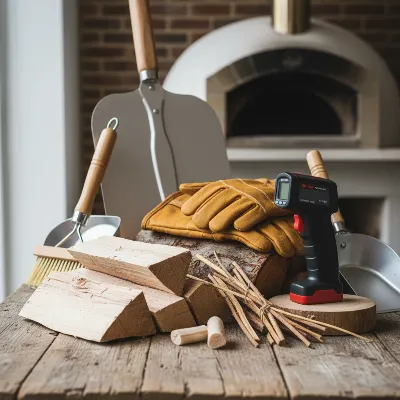 Essential tools for a wood-fired pizza oven including kindling, logs, firelighter, and temperature gun.
Step-by-Step Guide to Lighting Your Pizza Oven Quickly
Now, let’s get down to lighting that fire! The goal is to create a fierce, clean-burning flame that rapidly brings your oven to optimal pizza-making temperatures.
Building the Initial Fire (The “Jenga” or “Teepee” Method)
The way you arrange your initial fuel pile significantly impacts how quickly and effectively your fire takes hold.
- Center Your Setup: Place your natural firelighter directly in the center of your clean oven floor, or slightly to one side if your oven has a dedicated firebox shield.
- Construct the Kindling Structure: Around the firelighter, build a loose “Jenga-style tower” or “teepee” with 5-7 pieces of small, dry kindling. The key is to create space for air to circulate freely. Avoid packing the kindling too tightly, as this will stifle the flames.
- Ignite: Using a long match or your propane torch, light the natural firelighter. If using a torch, aim the flame at the base of the kindling for 30-60 seconds until several pieces are actively burning. Keep the oven door removed or fully open to ensure maximum oxygen flow. If your oven has a chimney damper, ensure it is completely open to draw smoke effectively.
Fanning the Flames and Gradual Fuel Addition
Once the kindling is lit, the next phase is about building heat rapidly and steadily.
- Feed the Fire Gradually: For the next 10-15 minutes, continue adding 3-4 pieces of kindling every couple of minutes. The goal is to create a robust, bright flame, not a smoky, smoldering one.
- Boost Oxygen: If the flames seem hesitant, gently blow at the base of the fire or use a small bellows or an electric fire starter to introduce more oxygen. This can dramatically accelerate the ignition and growth of the fire.
- Transition to Hardwood: As the kindling burns down and you see a healthy bed of glowing embers, it’s time to start introducing your small hardwood logs. Add 2-3 logs, positioning them to allow good airflow around them. Don’t dump a large pile in; gradually build up the fire.
- Spread the Heat: As the fire grows, gently spread it across the front stones of your oven floor using your ash rake or pizza peel. This helps to distribute the initial heat more evenly across the hearth.
Achieving Optimal Temperature Fast
The critical sign that your oven is approaching pizza-ready temperatures is the “whitening” of the dome.
- Observe the Dome: After about 15-20 minutes of active burning, you should start to see a small, clear (or white) spot appear at the top center of your oven’s dome. This phenomenon, where carbon deposits burn off, signifies that the dome surface is reaching approximately 700°F (370°C). This white spot will gradually expand outwards.
- Build a Solid Base Heat: Once the dome starts to whiten and you have a significant pile of glowing embers, add another 3-4 small pieces of hardwood to truly build a solid heat base. Continue to add logs one at a time, ensuring each piece catches fire properly before adding the next.
- Check Temperatures: Use your infrared thermometer to periodically check the temperature of both the oven dome and the hearth (the cooking floor). For classic Neapolitan-style pizzas, you’re aiming for dome temperatures between 800-900°F (427-482°C) and floor temperatures slightly lower, ideally around 600-650°F (316-343°C) for beginners to prevent instant burning of the crust.
- Move the Fire: Once the oven is thoroughly heat-soaked and the desired temperatures are achieved (which, with this rapid lighting method and good wood, can be as fast as 25-45 minutes), use your long-handled ash rake or brush to push the burning logs and hot coals to one side or the very back of the oven. This creates a dedicated cooking zone on the clear side of the hearth and allows the radiant heat from the fire to continue circulating across the dome.
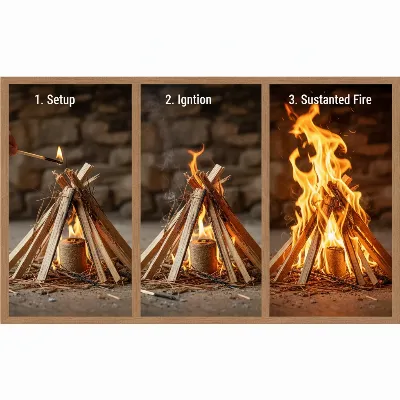 Step-by-step process of lighting a wood-fired pizza oven quickly with kindling and a firelighter.
Strategizing for Consistent Heat and Efficient Cooking
Getting your wood-fired oven hot is one thing; keeping it consistently hot and managing heat for perfect pizzas is another. This is where strategic fire management comes into play.
Maintaining the Fire for Pizza
Once your oven reaches temperature and you’ve moved the main fire to one side, you’re primarily working with a hot coal bed and a few active flames.
- Replenish Gradually: To maintain heat, add new logs one at a time, roughly every 15-20 minutes, directly onto the existing embers. Place them so they catch fire quickly but don’t overwhelm the space or stifle airflow. Remember, a smaller, steady flame is often more effective than a massive, uncontrolled blaze.
- Avoid Overloading: Resist the urge to pile too many logs into the oven. Overloading can reduce oxygen flow, cause excessive smoke, and actually lower the oven’s internal temperature as the wood struggles to combust efficiently. A lively, bright flame indicates good airflow and efficient burning.
- Door Management: While preheating, the oven door should be fully open or removed. Once you’re cooking pizza, the door is typically removed entirely or left slightly ajar. Sealing the door completely during high-temperature cooking can prevent proper airflow and potentially damage the oven or door over time.
Temperature Zones and Control
Wood-fired ovens naturally create different heat zones, and understanding these is key to cooking a variety of dishes, especially pizza.
- Hot Zone (Near the Fire): This is where the direct flame and hottest embers reside. It’s ideal for quickly blistering crusts or finishing the top of a pizza.
- Moderate Zone (Center Hearth): Once the fire is moved to the side, the cleared cooking floor becomes your primary moderate-to-high heat zone, perfect for baking the majority of your pizza.
- Cooler Zone (Away from the Fire): The area furthest from the fire will be cooler, suitable for keeping pizzas warm or cooking dishes that require less intense heat.
For even pizza cooking, you’ll need to rotate your pizza frequently using a turning peel. This ensures all sides of the crust get equal exposure to the radiant heat from the dome and flames, preventing one side from burning while the other remains undercooked. As you become more experienced, you’ll learn to “read” your oven and instinctively know where to position your pizza for optimal results.
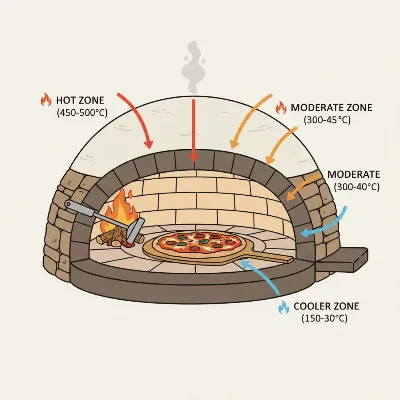 Illustration of heat zones in a wood-fired pizza oven with fire moved to the side, and a pizza cooking on the clear hearth.
Common Mistakes to Avoid for Faster Heating
Even with the best intentions, a few common errors can significantly slow down your wood-fired pizza oven’s heating process or lead to less-than-perfect results. Being aware of these pitfalls will help you avoid frustration and enjoy delicious pizza sooner.
- Using the Wrong Wood: This is perhaps the most frequent mistake.
- Softwoods: Pine, spruce, and cedar burn quickly, produce excessive smoke, and can taint your food with off-flavors. They also create more creosote buildup, which can be harmful.
- Wet or Green Wood: Wood with high moisture content will smolder, produce copious amounts of acrid smoke, and struggle to reach high temperatures. Always use seasoned or kiln-dried wood.
- Oversized Logs: Large logs take much longer to ignite and establish a vigorous flame, prolonging the preheating phase. Split your wood into smaller, manageable pieces for faster heat.
- Insufficient Airflow: Fire needs oxygen. Without it, your fire will smolder inefficiently.
- Overloading the Firebox: Piling too much wood in the oven, especially during the initial light, chokes the flames. Build a loose structure with kindling and add wood gradually.
- Closed Damper or Blocked Vents: Ensure your chimney damper is fully open during lighting and preheating. Any blockages will hinder smoke exit and proper oxygen intake.
- Skipping Preheating or Rushing It: Wood-fired ovens need time for their thermal mass (the brick or refractory material) to fully absorb and radiate heat.
- Insufficient Heat Soak: If you try to cook before the dome has fully whitened and the hearth is scorching hot, your pizza will cook unevenly, with a potentially soggy bottom and undercooked toppings. While aiming for speed, patience in the initial preheat is crucial.
- Using Chemical Accelerants: Never, under any circumstances, use lighter fluid, kerosene, or other chemical accelerants. They are extremely dangerous, can damage your oven, and will infuse toxic chemicals and unpleasant tastes into your food. Stick to natural firelighters.
- Ignoring Ash Buildup: A layer of ash on the oven floor acts as an insulator, preventing the hearth from reaching and maintaining its optimal temperature. It also reduces crucial airflow. Regular cleaning before each use is essential for efficient heating.
- Improper Fire Placement: Building the fire too close to the oven’s mouth can cause smoke to spill out, depositing soot on the front of your oven and potentially irritating those nearby. Start the fire in the center, and once established, move it to the side or back to allow smoke to properly exit through the flue.
By being mindful of these common mistakes, you can significantly streamline your pizza oven lighting process, ensuring a faster, cleaner burn and ultimately, more delicious wood-fired pizzas at home.
Conclusion
Mastering the art of lighting a wood-fired pizza oven quickly at home might seem like a grand endeavor, but as you’ve discovered, it boils down to understanding a few key principles and practicing a straightforward technique. From selecting the right kiln-dried hardwoods and preparing your oven with meticulous care, to constructing an initial fire that breathes life into the dome, every step contributes to a swift and efficient heat-up. You’ve learned how to leverage airflow, gradually add fuel, and identify the tell-tale “whitening” that signals your oven is primed for perfection.
The journey to authentic, homemade wood-fired pizza is one of rewarding discovery. By embracing these quick lighting strategies, you’re not just saving time; you’re elevating your culinary experience, ensuring every pizza boasts that coveted crispy crust and perfectly cooked toppings. So, gather your tools, choose your wood wisely, and ignite that fire with confidence. Your backyard pizzeria awaits, ready to deliver unforgettable flavors and shared moments. What delicious creations will you bake first in your perfectly fired-up oven?
Frequently Asked Questions
How long does it typically take to heat a wood-fired pizza oven?
With the right technique and kiln-dried hardwoods, a home wood-fired pizza oven can reach optimal cooking temperatures (around 800-900°F or 427-482°C) in as little as 25-45 minutes. Larger or less insulated ovens may take slightly longer, but proper fire building significantly reduces this time.
What kind of wood should I absolutely avoid?
You should never use softwoods like pine, cedar, or spruce, as they produce excessive smoke, creosote, and unpleasant flavors. Also, avoid green (wet) wood, treated wood (which can release toxic fumes), painted wood, or any type of composite material, as these are unsafe and will compromise your food’s taste and your oven’s performance.
Can I use a torch to light my pizza oven?
Yes, a handheld propane or butane torch can be an excellent tool for lighting your Pizza Oven quickly. Directing the flame at the base of your kindling for 30-60 seconds can accelerate ignition, making the process much faster and easier than using matches alone.
How do I know when my pizza oven is hot enough?
The clearest indicator is the “whitening” of the oven dome, where carbon deposits burn off, revealing the lighter refractory material underneath. This usually occurs when the dome reaches around 700°F (370°C). For precise measurement, use an infrared thermometer to check the temperature of both the dome and the cooking floor. Aim for 800-900°F for Neapolitan pizza.
Should I keep the oven door open or closed while heating?
During the initial lighting and preheating phases, the oven door should be removed or kept fully open to ensure maximum airflow, which is crucial for building a hot, clean-burning fire. Once the oven is up to temperature and you are cooking, the door is typically removed entirely or left slightly ajar to manage airflow and maintain heat.