Imagine the aroma of a perfectly baked pizza filling your kitchen, its crust crispy, cheese bubbling, and toppings caramelized—all achieved in a matter of minutes, right on your countertop. For too long, restaurant-quality pizza seemed out of reach for home cooks, confined to bulky outdoor units or conventional ovens that just couldn’t hit the extreme temperatures needed. But the landscape of home cooking has been revolutionized by innovative countertop indoor pizza ovens, offering unparalleled speed and taste. This comprehensive guide will navigate the world of these compact culinary marvels, helping you discover the ideal model to bring authentic pizzeria flavor to your home in 2026.
Pizza Ovens: An Overview and Your Buying Guide
What is a Pizza Oven?
Table is empty.A pizza oven is a specialized appliance designed to reach significantly higher temperatures than a conventional kitchen oven, typically ranging from 750°F to 950°F (400°C to 510°C). This intense heat, combined with specific heat transfer mechanisms (radiant, convection, and conduction), allows pizzas to cook rapidly—often in as little as 60-90 seconds. This quick cooking process creates the coveted crispy crust, perfectly cooked toppings, and beautifully melted cheese that are hallmarks of authentic Neapolitan-style pizza. While traditional home ovens can dry out the crust during longer bake times, a dedicated pizza oven ensures a superior texture with a crisp exterior and a soft, chewy interior. These versatile ovens can also roast vegetables, sear meats, and bake bread much faster than a standard oven.
Popular Types of Pizza Ovens
While the focus for countertop indoor use narrows the field, understanding the broader categories of pizza ovens helps in appreciating their unique characteristics.
- Wood-Fired Pizza Ovens: Revered for their authentic, smoky flavor, these traditional ovens use burning wood to heat both the oven floor and dome, achieving very high temperatures (typically 700-850°F or 370-450°C). They are beloved by purists for the unique char and taste imparted by wood smoke, often seen in classic Neapolitan pizzas. However, wood-fired ovens require significant space, can take 45-60 minutes to preheat, and demand active fuel management, making them primarily suited for outdoor installation.
- Gas Pizza Ovens: Offering a balance of speed and convenience, gas ovens heat up quickly (around 15-20 minutes) and reach incredibly high temperatures (some up to 1140°F or 615°C) using propane or natural gas. They provide precise temperature control, making them easier to use than wood-fired models, but they don’t impart the smoky flavor. Gas ovens are often portable and typically designed for outdoor use due to ventilation requirements, though some dual-fuel models exist.
- Electric Pizza Ovens (Indoor Countertop Focus): These are the true game-changers for home kitchens, designed specifically for indoor use. Electric pizza ovens utilize powerful heating elements to rapidly preheat and maintain consistent, high temperatures, often up to 850°F or 900°F (450°C or 480°C) for premium models. They are compact, portable, and require only a standard electrical outlet, eliminating the need for fuel management or outdoor space. Electric ovens are prized for their ease of use, precise temperature control, and consistent results, making them ideal for urban dwellers or anyone prioritizing convenience and quality in their kitchen.
Comparison Table of Pizza Oven Types
To help visualize the differences, here’s a comparison of the primary pizza oven types based on key criteria:
| Feature | Electric (Indoor Countertop) | Gas (Outdoor/Portable) | Wood-Fired (Outdoor/Traditional) |
|---|---|---|---|
| Temperature | 600-900°F (315-480°C) | 750-1140°F (400-615°C) | 700-850°F (370-450°C) |
| Heat-up Time | 15-20 minutes | 15-20 minutes | 45-60 minutes |
| Cooking Time | 60-120 seconds | 60-90 seconds | 60-90 seconds |
| Flavor Profile | Clean, pure pizza flavor | Clean, pure pizza flavor (no smoke) | Authentic smoky, charred flavor |
| Fuel Type | Electricity | Propane or Natural Gas | Wood pellets or logs |
| Portability | High (often compact for countertops) | High (many models are designed for mobility) | Low (fixed or heavy semi-portable designs) |
| Best Use Case | Indoor home use, apartments, convenience | Outdoor entertaining, quick bakes | Authentic taste, outdoor ambiance, hobbyists |
| Maintenance | Relatively low, mainly cleaning surfaces | Moderate, cleaning burners, gas line checks | High, ash removal, chimney cleaning, wood storage |
| Smoke/Ventilation | None, safe for indoor use | Minimal, outdoor use recommended | Significant, requires outdoor or professional ventilation |
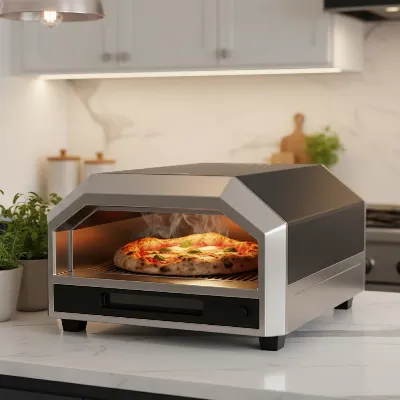 Modern electric pizza oven on kitchen counter, cooking Neapolitan-style pizza with steam rising, soft ambient lighting.
How to Choose a Pizza Oven
Selecting the best countertop indoor pizza oven for your home involves considering several practical factors to ensure it meets your specific needs and kitchen setup.
First, determine your usage needs. Are you a casual pizza maker who wants a quick weeknight meal, or an aspiring pizzaiolo looking to experiment with artisan recipes? For most home cooks seeking convenience and quality, an electric indoor model is an excellent choice. Next, establish your budget. Indoor pizza ovens vary widely in price, from entry-level options offering good value to premium models packed with advanced features. Knowing your spending limit helps narrow down choices significantly.
Consider your kitchen space and available counter real estate. Countertop indoor ovens are designed to be compact, but dimensions still vary. Measure your available counter width, depth, and height, especially if you have overhead cabinets. Look for models that fit comfortably without feeling cramped. Desired features are also key. Do you need precise temperature control, a built-in timer, or a viewing window to monitor your pizza? Some advanced models offer specific settings for different pizza styles, like Neapolitan or New York, enhancing versatility. Finally, research brand reputation and customer reviews. Stick to established brands known for quality and reliable performance, as this often translates to better durability and customer support.
Top 5 Countertop Indoor Pizza Ovens for 2026
For those seeking to replicate pizzeria-quality pies at home, these five countertop indoor pizza ovens stand out for their performance, design, and user-friendliness, making them top choices for 2026.
-
Ooni Volt 12 Electric Pizza Oven:
The Ooni Volt 12 is consistently hailed as a top-tier indoor electric pizza oven, offering restaurant-style results in just 90 seconds. It boasts fast heat-up times, reaching temperatures up to 850°F (450°C), comparable to its outdoor counterparts.- Key Features: Adjustable temperature, built-in timer, interior light, robust construction.
- Pros: Exceptional speed and temperature, consistent bake, elegant design, easy to use controls, suitable for both indoor and outdoor use.
- Cons: Premium price point.
- Ideal User: Pizza enthusiasts who demand high performance, quick cooking, and authentic results, willing to invest in a top-of-the-line indoor oven.
-
Breville Smart Oven Pizzaiolo:
The Breville Smart Oven Pizzaiolo is renowned for its ability to deliver high heat (over 750°F or 400°C) for authentic Neapolitan pizzas, making it a favorite for many home chefs. Its element IQ system intelligently controls heating elements to replicate the three types of heat found in a brick oven.- Key Features: Dedicated pizza settings (wood-fired, New York, pan, thin & crispy, frozen), automatic heat management, viewing window.
- Pros: Excellent crust development, easy to use, compact design that fits most counters, smart technology for precise cooking.
- Cons: Can be slow to preheat compared to Ooni Volt, higher price.
- Ideal User: Those who appreciate smart technology, seek versatility for various pizza styles, and want consistent, high-quality results with minimal guesswork.
-
Cuisinart Indoor Pizza Oven:
The Cuisinart Indoor Pizza Oven presents a more budget-friendly option without completely sacrificing quality, making it an excellent choice for beginners. While it might not reach the extreme temperatures of premium models as quickly, it still produces good pizza for family nights.- Key Features: Compact size, dedicated pizza stone, variable temperature control.
- Pros: Affordable, suitable for beginners, decent performance for the price, makes good pizza.
- Cons: Slower cooking times, may not achieve true Neapolitan leopard-spotting on the crust.
- Ideal User: Budget-conscious buyers or those new to pizza making who want an accessible entry point into the world of home pizza ovens without a large investment.
-
Effeuno P134 Indoor Pizza Oven:
The Effeuno P134 is a highly regarded Italian-made oven, celebrated for its powerful heating and even cooking, allowing users to bake different pizza styles with professional results. It’s a popular choice among serious home pizza makers in the know.- Key Features: High temperatures (up to 842°F or 450°C), dual heating elements (top and bottom), internal light, robust stainless steel construction.
- Pros: Professional-grade performance, extremely fast cooking, exceptional heat retention, capable of true Neapolitan char.
- Cons: Very high price point, can be harder to find in some markets, often requires a dedicated circuit.
- Ideal User: Advanced home pizzaiolos seeking a professional-grade indoor oven for consistent, authentic Italian-style pizzas and are willing to pay for top performance.
-
Chefman Home Slice Indoor Pizza Oven:
The Chefman Home Slice offers great value and simple controls, making it perfect for those who want tasty pizza without spending a lot. It’s another accessible option for quick and enjoyable pizza nights.- Key Features: Compact footprint, easy-to-use dial controls, pre-set temperature options.
- Pros: Very budget-friendly, simple operation, quick enough for casual use.
- Cons: Lower maximum temperature compared to premium models, may not achieve ultra-fast cooking times.
- Ideal User: Value-conscious consumers or those with limited counter space who want a straightforward, easy-to-use indoor pizza oven for regular family meals.
> “The rise of electric indoor pizza ovens has truly democratized gourmet pizza, allowing anyone to achieve pizzeria-quality results in their own kitchen without the complexities of outdoor units.” – Veronica Mclean, Former Sous Chef and Professional Pizzaiolo
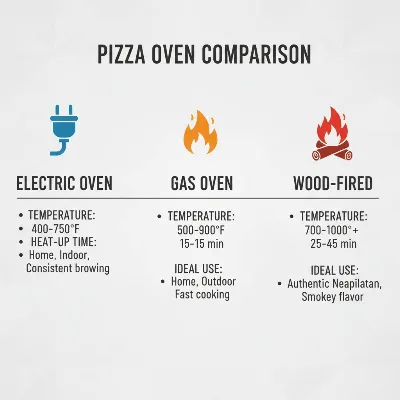 Infographic comparing features of electric, gas, and wood-fired pizza ovens with icons and data points, clear and concise.
Tips for Using and Maintaining Your Indoor Pizza Oven
Maximizing the performance and lifespan of your countertop indoor pizza oven involves understanding proper usage and consistent maintenance.
Optimal Usage: Always preheat your oven thoroughly as per the manufacturer’s instructions. This is crucial for achieving high temperatures and an even bake, ensuring the pizza stone is scorching hot before the dough touches it. For most electric models, this takes about 15-20 minutes. When launching your pizza, use a lightly floured pizza peel to prevent sticking, and work quickly to minimize heat loss from the oven. Many indoor ovens cook pizza in under two minutes, so monitor your pizza closely, rotating it with the peel if necessary to ensure even browning. Avoid overloading toppings, as this can weigh down the dough and prevent even cooking.
Effective Maintenance: A regular cleaning routine is essential for longevity and consistent performance.
- Daily Quick Clean: After each use, once the oven has cooled to around 200°F (93°C) but is still warm, use a long-handled wire or brass bristle brush to sweep away loose crumbs, flour, and burnt debris from the cooking stone and interior. For electric ovens, a damp microfiber cloth can then wipe down interior walls and heating elements once fully cooled.
- Weekly Maintenance: Conduct a more thorough wipe-down of all interior surfaces with a food-safe degreaser (for gas and electric ovens) to remove grease splatter. Check and clean burner ports if applicable, and inspect door seals for any damage that could lead to heat loss.
- Monthly Deep Clean: This involves a more comprehensive inspection. Scrape off any carbon buildup on the oven floor and walls using a metal scraper. For stubborn soot stains on ceramic or stone surfaces, a baking soda paste can be effective; rinse thoroughly and dry completely to prevent moisture buildup. Always ensure no cleaning solution residue remains before the next use.
- Common Issues & Troubleshooting: If you notice uneven cooking, check if the oven is properly preheated or if there’s any debris obstructing heating elements. Slow preheat times might indicate a faulty thermostat or worn elements, which may require professional inspection. Strange noises or burning smells should prompt an immediate check of electrical components or ventilation.
Where to Buy a Countertop Indoor Pizza Oven?
Finding your ideal countertop indoor pizza oven is easier than ever with numerous retail options available. Major online retailers like Amazon, Williams Sonoma, and Crate & Barrel offer a wide selection of brands including Ooni, Breville, and Cuisinart. Many brands also sell directly through their official websites (e.g., Ooni.com, Breville.com), often providing exclusive bundles or sales. Specialty kitchen appliance stores, both online and brick-and-mortar, can also offer expert advice and a curated selection.
When purchasing online, always verify the seller’s reputation and read recent customer reviews. Pay close attention to shipping policies, warranty information, and return options. Checking product dimensions carefully against your available counter space is especially important for indoor models to ensure a perfect fit.
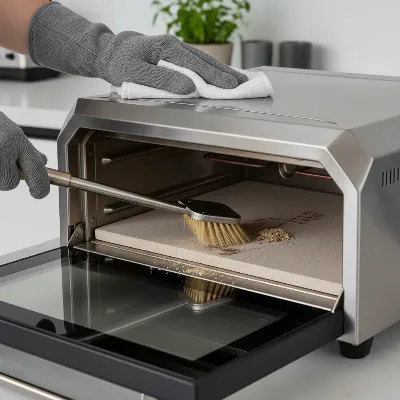 Hands cleaning the interior of an electric countertop pizza oven using a brush and cloth, showing a clean and well-maintained appliance.
Conclusion
The pursuit of perfect homemade pizza has never been more attainable, thanks to the ingenuity of countertop indoor pizza ovens. These compact powerhouses bring the high-heat, rapid-cooking capabilities of professional pizzerias directly into your kitchen, transforming casual meals into culinary events. From the lightning-fast performance of the Ooni Volt 12 to the smart versatility of the Breville Pizzaiolo and the budget-friendly appeal of the Cuisinart, there’s a model perfectly suited to every home cook’s needs and aspirations. By considering your budget, space, and desired features, alongside proper maintenance, you’re set to enjoy countless delicious, crispy-crusted pizzas for years to come. What culinary creations will you embark on first with your new countertop companion?
Frequently Asked Questions
Can I really get restaurant-quality pizza from an indoor countertop oven?
Absolutely! Modern indoor pizza ovens are engineered to reach extreme temperatures (up to 900°F) and cook pizzas in 60-120 seconds, replicating the conditions of commercial brick ovens. This rapid, high-heat cooking ensures a perfectly crispy crust and evenly cooked toppings, delivering a taste truly comparable to your favorite pizzeria.
Do indoor pizza ovens produce a lot of smoke?
No, electric indoor pizza ovens are designed specifically for kitchen use and do not produce smoke like their wood-fired counterparts. They use electric heating elements, making them a clean and safe option for indoor environments without requiring special ventilation beyond what a normal kitchen provides.
How long does it take for an indoor pizza oven to preheat?
Most high-performance indoor electric Pizza Ovens can preheat to optimal cooking temperatures within 15 to 20 minutes. Some premium models, like the Ooni Volt, are known for their incredibly fast heat-up times, allowing you to go from cold to cooking in minimal time.
Are countertop indoor pizza ovens energy efficient?
Generally, yes. Because they are designed to heat a smaller, enclosed space to very high temperatures quickly, and cook pizzas in just minutes, they are often more energy-efficient for pizza making than heating a large, conventional oven for a longer period.
Can I cook more than just pizza in an indoor pizza oven?
While optimized for pizza, these ovens are incredibly versatile. Their high heat is excellent for roasting vegetables, searing meats, baking flatbreads, or even warming up leftovers with a crispy finish. Always check your oven’s manual for recommended uses and cooking temperatures for non-pizza items.
How often should I clean my indoor pizza oven?
A quick sweep of debris after each use is recommended once the oven has cooled. A more thorough wipe-down with a food-safe degreaser should be done weekly, and a deep clean to remove carbon buildup or stains is advisable monthly to maintain optimal performance and hygiene.