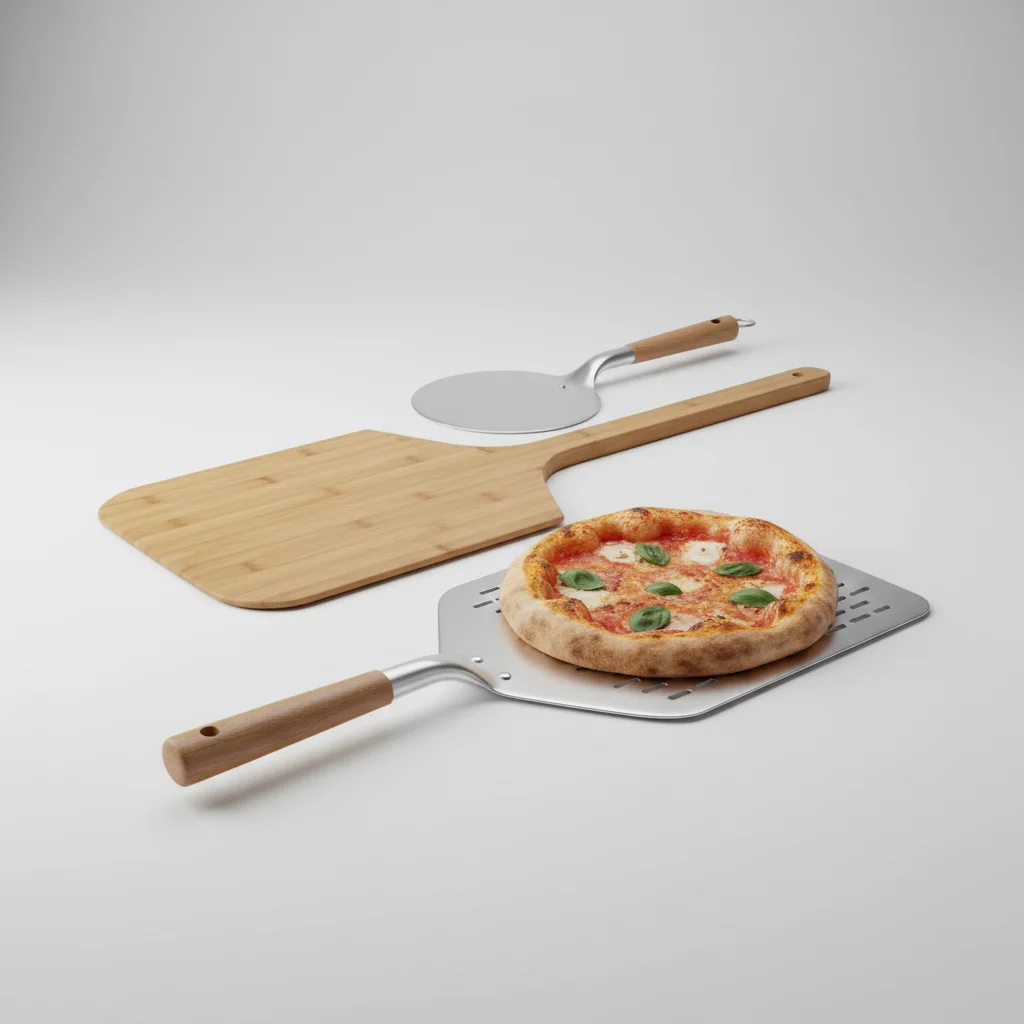
Pizza oven peels are indeed essential for anyone serious about making great pizza at home. While it might seem like a simple tool, a good peel is crucial for safely transferring your raw pizza into a scorching hot oven and retrieving the cooked pie without incident. Without one, you risk burning yourself, deforming your pizza, or even damaging your oven.
Why a Pizza Peel is Non-Negotiable
Attempting to launch a pizza into a high-temperature oven by hand is not only dangerous but also highly impractical. The delicate dough can easily stick, tear, or lose its shape, leading to a messy and frustrating experience. A pizza peel provides a stable, flat surface that allows for a smooth, swift transfer, ensuring your pizza lands perfectly on the hot stone or deck.
Beyond the launch, the peel is equally important for retrieval. Once cooked, a pizza is too hot to handle directly and often too large for tongs or spatulas. A sturdy peel slides underneath the finished pie, allowing you to safely remove it from the oven and transfer it to a cutting board.
Types of Pizza Oven Peels
There are primarily two types of pizza oven peels: launching peels and turning peels. Launching peels are typically larger, with a broad, flat surface designed for the initial transfer of the raw pizza. They can be made from wood or metal, with wooden peels often preferred by beginners for their non-stick properties, while metal peels are thinner and can slide under dough more easily with practice.
Turning peels, on the other hand, are smaller, round, and often perforated. Their primary purpose is to rotate the pizza within the oven to ensure even cooking, especially in very hot ovens where one side might cook faster than the other. The perforations help release excess flour and steam, preventing a soggy crust.
- Wooden launching peels for easy dough release.
- Metal launching peels for thinness and durability.
- Perforated turning peels for even cooking and steam release.
- Short-handled peels for indoor ovens.
- Long-handled peels for deep outdoor ovens.
Choosing the Right Material and Size
|
Our Picks for the Best Pizza Oven in 2026
As an Amazon Associate I earn from qualifying purchases.
|
||
| Num | Product | Action |
|---|---|---|
| 1 | Electric-Pizza-Oven-Indoor, 12 Inches Countertop Cooker,800℉ Electric Pizza Maker with Timer, Ceramic Stone, Viewing Window, Complete Accessory Kit, Black |

|
| 2 | PIEZANO XL 14 Inch Electric Indoor Pizza Oven Heats up to 800˚F - Pizza Maker with Stone for Crispy Crust Pizza, Cooks in Under 6 Minutes, Countertop, Dual Heat Control, Peels & Scraper Included |
|
| 3 | Presto 03430 Pizzazz Plus Rotating Oven, Black |
|
| 4 | PIEZANO 12 Inch Electric Indoor Pizza Oven Heats up to 800˚F - Pizza Maker with Ceramic Stone for Crispy Crust Pizza, Cooks in Under 6 Minutes, Countertop, Dual Heat Control, Peels & Scraper Included |
|
| 5 | Pizza Oven Outdoor 12" Wood Fired Pizza Ovens Pellet Pizza Stove for outside, Portable Stainless Steel Pizza Oven for Backyard Pizza Ovens |
|
| 6 | Gourmia Indoor Pizza Oven Air Fryer Toaster – 1800W Countertop Multi-Cooker with Pizza Stone, Digital Controls & 6 Presets, Stainless Steel |
|
| 7 | Pizza Oven Indoor, 12 Inch Retro Pizza Maker, Rapid Heating 800˚F, 1200W Glazed Ceramic Stone Electric Pizza Cooker, Two-button Precise Temperature Control, Viewing Window for Precise Cooking |
|
| 8 | BIG HORN OUTDOORS 12" Multi-Fuel Outdoor Pizza Oven – 3-in-1 Wood-Fired, Gas & Electric Compatible (Burners Sold Separately), Pellet Pizza Oven Portable Pizza Maker for Backyard, Camping & Tailgating |
|
| 9 | CHEFMAN Indoor Pizza Oven - Makes 12 Inch Pizzas in Minutes, Heats up to 800°F - Countertop Electric Pizza Maker with 5 Touchscreen Presets, Pizza Stone and Peel Included - Stainless Steel |
|
| 10 | Presto 03434 Pizzaz Plus Rotating Oven - 12-Inch, Countertop Pizza Oven, Nonstick Tray, Top and Bottom Heating Elements, Easy to Clean, Green/Gold |
|
When selecting a pizza peel, consider both the material and the size. Wooden peels, often made from bamboo or untreated wood, are excellent for preventing dough from sticking, especially when dusted with flour or semolina. However, they can absorb moisture and odors over time and require more careful cleaning. Metal peels, usually aluminum or stainless steel, are more durable, easier to clean, and thinner, making it simpler to slide under a pizza. They do require more flour or semolina to prevent sticking.
The size of your peel should correspond to the size of your pizzas and your oven. A peel that is too small won’t adequately support the pizza, while one that is too large might not fit comfortably into your oven’s opening. For most home pizza makers, a launching peel with a head around 12-14 inches wide is ideal, paired with a turning peel of about 7-9 inches in diameter.
Maintenance and Best Practices
Proper care of your pizza peels will extend their lifespan and ensure optimal performance. Wooden peels should be hand-washed with mild soap and water, then thoroughly dried to prevent warping or cracking. Avoid soaking them. Metal peels can typically be washed in a dishwasher, though hand-washing is often sufficient and can prevent water spots.
Before each use, especially with metal peels, generously dust the surface with semolina flour or regular flour. This creates a barrier that helps the dough slide off smoothly. Practice your launch technique with a cold oven first to get a feel for the motion. A quick, confident flick of the wrist is key to a perfect launch.
Conclusion
In summary, pizza oven peels are far more than just an accessory; they are a fundamental tool for safe, efficient, and successful pizza making. Investing in a good quality launching peel and a turning peel will significantly enhance your pizza-making experience, allowing you to create perfectly cooked pies with ease and confidence. Don’t underestimate their importance in achieving that authentic, evenly baked crust.

Great info here. I’ve been using a cheap wooden peel for a while, and it works okay, but I’ve noticed the dough sometimes sticks if I’m not super fast. I’m definitely considering upgrading to a metal one after reading about the benefits for a smoother transfer. It’s worth it to avoid a messy launch.
Before reading this, I thought any old flat surface would do, but I was so wrong! The point about the delicate dough tearing really resonated with my past experiences. Getting a proper pizza oven peel has seriously elevated my homemade pizza game. It’s all about that stable, flat surface for a perfect launch.
I used to struggle so much getting my pizzas into my Ooni without making a mess. This guide really highlighted why a good peel is non-negotiable. I finally invested in a perforated metal peel, and it’s made a world of difference. No more sticking or misshapen pies!
I agree that a peel is essential, but I found the section on retrieval to be a bit basic. While it’s true pizzas are too hot to handle, I wish there was more detail on different peel types specifically for getting the pizza out without scraping toppings. My current peel sometimes pushes cheese around.