To keep pizza dough from sticking to the peel, use coarse semolina or rice flour for dusting, ensure your dough is properly kneaded and not over-proofed, and execute a quick, confident launch into a preheated oven. These methods create a low-friction barrier and minimize the time moisture has to bond the dough to the peel, preventing the common issue of a stuck pizza. Mastering these techniques will lead to perfectly round, crispy-bottomed pizzas every time.
Understanding the “Why”: Why Pizza Dough Sticks to the Peel
Before diving into solutions, it’s helpful to understand the root causes behind sticky pizza dough. Often, it’s a combination of factors rather than a single culprit. The primary reason is excess moisture. When the dough, or even just its surface, has too much moisture, it creates a bond with the peel, making release difficult. This can happen if the dough itself is too highly hydrated, if it sits on the peel for an extended period, or if wet toppings seep into the crust. Insufficient or incorrect dusting of the peel also plays a major role, failing to create a protective, low-friction barrier. Lastly, improper dough preparation, such as inadequate kneading or over-proofing, can result in a stickier, less manageable dough that is prone to adherence.
Choosing the Right “Dust”: Flour vs. Semolina vs. Other Alternatives
The material you use to dust your pizza peel is one of the most critical factors in preventing sticking. While many home bakers instinctively reach for all-purpose flour, professional pizzaiolos often opt for superior alternatives that offer better performance, especially in high-temperature ovens.
Semolina Flour
Semolina flour is a major upgrade for pizza enthusiasts. Made from durum wheat, it boasts a coarser, granular texture that acts like tiny “ball bearings” between your dough and the peel. This creates a highly effective, low-friction surface, allowing the pizza to glide smoothly. Beyond its non-stick properties, semolina is less likely to burn at high oven temperatures compared to regular flour, preventing bitter flavors and black specks on your crust. Its slightly nutty flavor can also subtly enhance the pizza’s base. Coarse semolina is generally recommended for dusting over finer varieties.
Rice Flour
An excellent, though perhaps less common, alternative is rice flour. Its ultra-fine particles make it naturally non-stick, and it’s particularly effective for high-hydration doughs that tend to be stickier. Rice flour also has a high burn point, similar to semolina, ensuring a clean, neutral flavor profile and no burnt residue on your pizza base.
All-Purpose/Bread Flour
|
Our Picks for the Best Pizza Oven in 2026
As an Amazon Associate I earn from qualifying purchases.
|
||
| Num | Product | Action |
|---|---|---|
| 1 | Presto 03430 Pizzazz Plus Rotating Oven, Black |

|
| 2 | PIEZANO 12 Inch Electric Indoor Pizza Oven Heats up to 800˚F - Pizza Maker with Ceramic Stone for Crispy Crust Pizza, Cooks in Under 6 Minutes, Countertop, Dual Heat Control, Peels & Scraper Included |
|
| 3 | BIG HORN OUTDOORS 12" Multi-Fuel Outdoor Pizza Oven – 3-in-1 Wood-Fired, Gas & Electric Compatible (Burners Sold Separately), Pellet Pizza Oven Portable Pizza Maker for Backyard, Camping & Tailgating |
|
| 4 | Presto 03434 Pizzaz Plus Rotating Oven - 12-Inch, Countertop Pizza Oven, Nonstick Tray, Top and Bottom Heating Elements, Easy to Clean, Green/Gold |
|
| 5 | CHEFMAN Indoor Pizza Oven - Makes 12 Inch Pizzas in Minutes, Heats up to 800°F - Countertop Electric Pizza Maker with 5 Touchscreen Presets, Pizza Stone and Peel Included - Stainless Steel |
|
| 6 | PIEZANO XL 14 Inch Electric Indoor Pizza Oven Heats up to 800˚F - Pizza Maker with Stone for Crispy Crust Pizza, Cooks in Under 6 Minutes, Countertop, Dual Heat Control, Peels & Scraper Included |
|
| 7 | Pizza Oven Indoor, 12 Inch Retro Pizza Maker, Rapid Heating 800˚F, 1200W Glazed Ceramic Stone Electric Pizza Cooker, Two-button Precise Temperature Control, Viewing Window for Precise Cooking |
|
| 8 | Pizza Oven Outdoor 12" Wood Fired Pizza Ovens Pellet Pizza Stove for outside, Portable Stainless Steel Pizza Oven for Backyard Pizza Ovens |
|
| 9 | Gourmia Indoor Pizza Oven Air Fryer Toaster – 1800W Countertop Multi-Cooker with Pizza Stone, Digital Controls & 6 Presets, Stainless Steel |
|
| 10 | Electric-Pizza-Oven-Indoor, 12 Inches Countertop Cooker,800℉ Electric Pizza Maker with Timer, Ceramic Stone, Viewing Window, Complete Accessory Kit, Black |
|
Regular all-purpose flour or bread flour can certainly be used, and they are readily available. However, they are finer than semolina or rice flour and absorb moisture more quickly from the dough. This means you need to work very fast once the dough is on the peel to prevent it from bonding. If left too long, regular flour can become pasty and cause sticking. In very hot pizza ovens (above 500°F or 260°C), regular flour is more prone to burning, leading to an unpleasant taste and appearance.
Why to AVOID Cornmeal
Many home cooks traditionally use cornmeal on their pizza peels, believing it prevents sticking. However, this is largely a misconception, especially for those baking in high-temperature ovens. Cornmeal has a low burn point, often charring at temperatures around 350°F (177°C). This results in bitter, burnt black specks on the bottom of your crust and a gritty, sandy texture. While it might work in a low-temperature home oven, for authentic, high-quality pizza, professionals strongly advise against it. Rice flour or semolina provide a much cleaner, smoother launch without these drawbacks.
| Dusting Agent | Texture | Non-Stick Efficacy | Burn Resistance (High Temp) | Flavor Impact | Best Use Case |
|---|---|---|---|---|---|
| Semolina Flour | Coarse, granular | Excellent | High | Neutral/Slightly nutty | Professional results, high-temp ovens, smooth launch |
| Rice Flour | Ultra-fine | Excellent | Very High | Neutral | High-hydration doughs, clean taste, high-temp ovens |
| All-Purpose/Bread Flour | Fine | Good (requires speed) | Low | Neutral (can burn) | Quick use, lower-temp ovens, readily available |
| Cornmeal | Coarse | Moderate | Very Low | Bitter when burnt | Generally discouraged, only for very low-temp ovens if no other option |
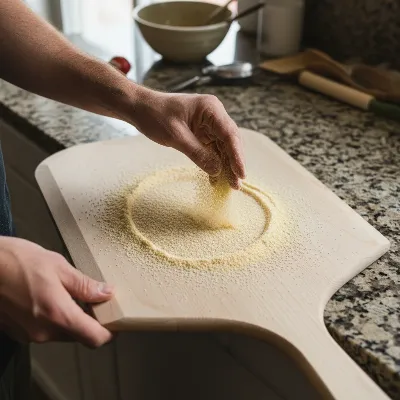 A close-up shot of hands dusting a pizza peel with a blend of semolina and rice flour, creating an even, non-stick surface.
Mastering Dough Preparation for a Non-Stick Launch
The way you prepare your pizza dough significantly impacts its stickiness. A well-prepared dough is inherently less prone to adhering to surfaces.
Hydration Levels
Dough hydration refers to the ratio of water to flour. While higher hydration can lead to a more airy, open crust, it also results in a stickier dough that is harder to handle. If you’re struggling with sticking, consider slightly reducing your dough’s hydration. Conversely, if you enjoy high-hydration doughs, ensure you compensate with generous amounts of non-stick dusting agents like semolina or rice flour. Different flours also absorb different amounts of water, so consistency with your chosen flour is key.
Proper Kneading
Adequate kneading is crucial for developing the gluten network within the dough. A well-developed gluten structure gives the dough strength and elasticity, making it smoother, easier to stretch, and less sticky. Knead your dough until it’s smooth, elastic, and tacky, but not overly sticky. The “windowpane test” – stretching a small piece of dough until it’s translucent without tearing – is a good indicator of sufficient gluten development.
Proofing
Over-proofing can also contribute to stickiness. When dough over-proofs, its structure can weaken, making it more fragile and prone to tearing and sticking. Aim for the “sweet spot” of proofing, where the dough has doubled in size but still retains its structure. If you notice your dough is excessively gassy and fragile, punch it down gently and let it rest for 10-15 minutes to regain some structure before handling.
Topping Wisely
Excess moisture from toppings can quickly transfer to the dough, making it stick to the peel. Drain watery ingredients like fresh mozzarella (fior di latte) or certain vegetables. Use a thicker tomato sauce rather than a very watery one. Assemble your pizza quickly once the dough is on the peel to minimize the time moisture has to soak in.
Techniques for a Flawless Pizza Launch
Even with the perfect dusting agent and dough, technique is paramount. Mastering the transfer from peel to oven requires practice and precision.
The Dusting Technique
Start by generously dusting your work surface where you will stretch the dough. Once the dough is stretched, carefully place it on a clean, dry pizza peel that has been lightly but evenly dusted with your chosen non-stick agent (semolina or rice flour works best). Don’t overdo it, as too much dust can create smoke in the oven, but ensure full coverage.
The “Shimmy Test”
This is a critical step that many home bakers overlook. Before adding toppings, or immediately after, gently give the pizza a quick shimmy on the peel. The entire pizza should slide freely. If any part sticks, lift that section gently and add a tiny pinch more semolina or rice flour underneath. Repeat until the pizza moves freely. This ensures you catch any sticky spots before you’re standing in front of a hot oven.
Act Quickly
Once your pizza is fully topped and ready on the peel, delay is your enemy. The longer the dough sits on the peel, the more time it has to absorb moisture from the dusting agent and the toppings, increasing the likelihood of sticking. Have your oven preheated and all tools ready so you can transfer the pizza as swiftly as possible.
Confident Launch Motion
When it’s time to launch, approach the oven with confidence. Position the peel over your preheated pizza stone or steel, aiming for the center. With a quick, decisive, forward-and-back flick of your wrist, slide the pizza off the peel and onto the hot surface. The “shimmy test” ensures the pizza is already loose, so this motion should be a smooth, singular action. Avoid hesitant or multiple attempts, which can cause the pizza to fold or stick.
Parchment Paper as a Helper
For beginners, or when working with particularly sticky doughs, parchment paper can be a lifesaver. Stretch your dough directly onto a sheet of parchment paper, add your toppings, and then use the parchment paper to transfer the pizza to the peel, and then into the oven. The parchment paper acts as a guaranteed non-stick barrier. Once the crust sets (usually after 2-3 minutes), you can often slide the parchment paper out from under the pizza and continue baking directly on the stone/steel for a crispier bottom.
The Role of Your Pizza Peel and Tools
The right tools can make a significant difference in preventing sticking.
Material Matters: Wood vs. Metal Peels
- Wooden peels are naturally more porous and absorb some moisture, which can aid in preventing sticking. They also provide a surface for flour to adhere to effectively. However, they need to be kept very dry and seasoned.
- Metal peels are thinner, making it easier to slide under a pizza. They conduct heat more readily, which can sometimes lead to dough warming up and sticking faster if not properly floured or if the dough sits too long. Many prefer slotted metal peels.
Slotted Peels
Slotted pizza peels, typically made of metal, feature a series of holes or slots across their surface. These perforations serve a dual purpose: they reduce the overall surface area in contact with the dough, minimizing sticking points, and allow any excess flour or semolina to fall away. This prevents burnt flour from accumulating in your oven and on the bottom of your pizza, ensuring a cleaner taste.
Keeping Your Peel Dry and Clean
A wet or dirty peel is a recipe for disaster. Always ensure your pizza peel is completely dry before use. Any moisture will instantly cause the dough to stick. Regularly clean your peel to remove any dough residue or burnt bits from previous launches, which can create uneven surfaces and promote sticking.
“The secret to a perfect pizza launch isn’t magic, it’s meticulous preparation and confident execution. Treat your peel like a stage and your dough like a performer, ensuring everything is set for a smooth debut.” – Enzo Rossi, Master Pizzaiolo
Troubleshooting Common Sticking Scenarios
Even with the best intentions, things can go wrong. Here are quick fixes for common sticking problems:
- Dough is too wet: If your dough feels excessively sticky during stretching, gently work in a small amount of extra flour until it’s more manageable. For high-hydration doughs, rely heavily on semolina or rice flour on the peel.
- Too many toppings: Heavy, wet toppings add weight and moisture, making the pizza harder to launch. Scale back on toppings or opt for drier ingredients.
- Dough sat too long: If you realize the pizza has been sitting on the peel for more than a couple of minutes and might be stuck, carefully lift the edges (if possible) and sprinkle more semolina underneath. Give it a good shimmy to confirm it’s loose before attempting to launch. If all else fails, parchment paper is your best friend.
Conclusion
Preventing pizza dough from sticking to the peel is a skill that elevates your homemade pizza game from good to extraordinary. By understanding the causes of sticking and implementing a few key strategies—choosing the right dusting agent like semolina or rice flour, preparing your dough meticulously, and executing a quick, confident launch—you can overcome this common hurdle. Embrace the “shimmy test,” keep your peel dry, and consider a slotted metal peel for optimal results. With these techniques, you’ll consistently achieve pizzas with perfectly crisp crusts and effortless transfers, transforming frustrating moments into triumphant culinary successes. What will be the next pizza masterpiece you launch with confidence?
Frequently Asked Questions
Can I use cornstarch on a pizza peel?
No, cornstarch is not recommended for a pizza peel. It tends to gel when wet, which can actually make the dough stick more. Stick to coarser flours like semolina or fine rice flour for best non-stick results.
What kind of semolina is best for a pizza peel?
Coarse semolina flour is generally preferred for dusting pizza peels. Its granular texture acts like small bearings, allowing the dough to slide easily without absorbing moisture too quickly, and it holds up well to high temperatures.
How much flour should I use on my pizza peel?
Use a light but even dusting. The goal is to create a thin, consistent layer that provides a barrier, not a thick pile. Too much can create smoke and an unpleasant burnt taste in the oven, while too little won’t prevent sticking.
Why does my dough stick even with flour?
Dough can still stick with flour if it’s too wet, sits on the peel for too long, or if you’re using a fine flour (like all-purpose) that absorbs moisture quickly. Try using semolina or rice flour, ensure your dough is properly kneaded and not over-proofed, and act quickly to launch the pizza.
Is a metal or wooden peel better for preventing sticking?
Both can work, but many prefer metal peels, especially slotted ones. Wooden peels absorb some moisture, which can help, but metal peels are thinner and easier to slide under dough. Slotted metal peels also allow excess flour to fall away, reducing burning. The key is proper dusting and technique, regardless of material.
Frequently Asked Questions
Can I use cornstarch on a pizza peel?
No, cornstarch is not recommended for a pizza peel because it tends to gel when wet, which can increase dough stickiness. For optimal non-stick results, use coarser flours such as semolina or fine rice flour instead.
What kind of semolina is best for a pizza peel?
Coarse semolina flour is generally preferred for dusting pizza peels. Its granular texture acts like small bearings, allowing the dough to slide easily without absorbing moisture too quickly, and it holds up well to high temperatures above 500u00b0F (260u00b0C).
How much flour should I use on my pizza peel?
Use a light but even dusting of flour on your pizza peel. The goal is to create a thin, consistent barrier, not a thick pile. Too much dusting agent can create smoke and an unpleasant burnt taste in the oven, while too little will not prevent sticking effectively.
Why does my dough stick even with flour?
Dough can still stick with flour if it is too wet, sits on the peel for too long, or if you are using a fine flour like all-purpose that absorbs moisture quickly. To prevent this, try using semolina or rice flour, ensure your dough is properly kneaded and not over-proofed, and act quickly to launch the pizza within 1-2 minutes of topping.
Is a metal or wooden peel better for preventing sticking?
Both metal and wooden peels can prevent sticking with proper technique, but many home pizza makers prefer metal peels, especially slotted ones. Wooden peels absorb some moisture, which can help, but metal peels are thinner and easier to slide under dough. Slotted metal peels also allow excess flour to fall away, reducing burning in the oven.

I was having such a hard time with my dough sticking to the peel, especially with wetter doughs. The tip about using coarse semolina flour was a game-changer for me. My last few launches have been so smooth, and I’m finally getting those perfectly round pizzas. No more frantic shaking!
The suggestions for dusting the peel are solid, and I’ve tried both semolina and rice flour. They work okay, but I still find that if my dough sits on the peel for even a few extra seconds, it starts to grab. I wish there was more emphasis on specific dough hydration levels to avoid this problem entirely.
Seriously, the ‘quick, confident launch’ part resonated so much with me. I used to hesitate, and that was exactly when my dough would get stuck. Since focusing on a swift motion into my preheated Ooni, I haven’t had a single stuck pizza. It’s all about commitment!
Great advice here! I always thought it was just my technique, but realizing the importance of a properly kneaded dough really helped. I’ve been paying more attention to that, and it’s made a noticeable difference. Still working on my quick launch, but things are definitely improving.